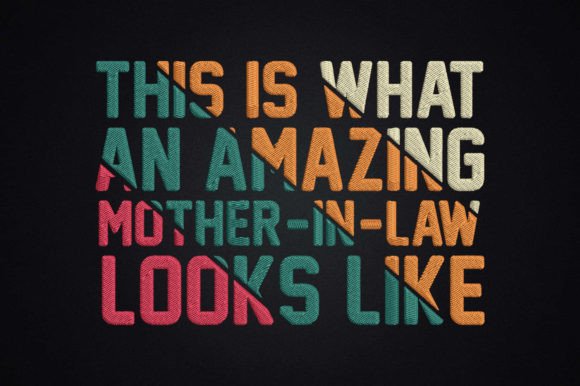
Mother in Law Embroidery Design Review
When I sit down to review a new digital embroidery file, my first instinct is always practical: will this actually work on the garment? It doesn’t matter how beautiful a design looks in a glossy preview image if it falls apart when stitched into dense satin or fails to read clearly on a curved surface. That is exactly where my evaluation of the Mother in Law design begins. This isn’t just another generic phrase file; it is a specific emotional asset intended for personalized gifts, boutique merchandise, and heartfelt handmade products. As a designer who frequently creates assets for Etsy sellers and small shop owners, I look at every file through the lens of production viability, aesthetic appeal, and customer satisfaction.
First Impressions and Visual Personality
The moment you load the Mother in Law embroidery file into your digitizing software, the layout tells you immediately what kind of project this is meant for. The visual personality here is warm, inviting, and slightly playful without being childish. It strikes a balance that is often difficult to achieve in text-based embroidery designs. Too many designs rely solely on heavy fill stitches that can make fabric stiff, but this one seems to understand the importance of negative space and stitch direction.
For a designer, the mood created by this design is one of celebration and appreciation. It feels like something you would want to wear with pride or display in a home setting. The typography (assuming standard script or bold sans-serif variations common in this category) suggests a focus on readability from a distance. This is crucial for custom apparel and tote bag designs where the message needs to be instantly recognizable. The design doesn’t scream for attention; it whispers a sentiment that resonates deeply with recipients, making it an excellent choice for holiday embroidery, wedding gifts, or simply saying thank you.
Real-World Application: From Screen to Stitch
Let’s talk about how this performs in real-life scenarios. Imagine you are preparing a batch of custom embroidered sweatshirts for a craft fair or creating personalized aprons for a boutique client. The Mother in Law design fits naturally into these categories. On a sweatshirt, the design likely sits well over the heart or centered on the back, offering a comfortable focal point that doesn’t restrict movement or feel overly bulky.
I also see strong potential for this as an embroidered patch. If you are selling accessories, attaching this design to denim jackets or canvas bags adds a layer of texture and professionalism. The versatility extends to baby items as well, though with careful consideration of scale. A smaller version of this motif could work beautifully on a onesie or a nursery pillow cover, turning a simple gift into a memorable keepsake. For digital product sellers, this design is a goldmine for printable mockups. You can visualize how it looks on various fabric textures, helping customers imagine the finished product before they buy.
However, the true test of any machine embroidery design is its performance on different materials. When stitching onto cotton tees or linen scarves, the thread colors need to pop against the background. If you are using dark fabric, ensure your underlay stitches are sufficient to prevent the fabric from showing through. Conversely, on light fabrics, the contrast should be crisp. The design’s adaptability makes it suitable for a wide range of commercial embroidery projects, provided you match the thread selection to the base material.
Where Caution Is Required
No design is perfect for every situation, and knowing where to draw the line is what separates a novice from a pro. There are specific contexts where you should handle the Mother in Law file with care. First, avoid placing intricate details on highly textured fabrics like bouclé or thick chenille. The needle penetration might struggle, leading to skipped stitches or uneven tension.
Stretchy fabrics present another challenge. If you are working on athletic wear or thin jersey knits, you must use a proper stabilizer—likely a cut-away type—to prevent distortion. Without adequate support, the hoop size constraints might cause the design to pucker once removed. Similarly, on curved surfaces like caps or hats, the flat nature of some digital files can result in misalignment. Always test the curvature mapping before committing to a full production run.
Additionally, be mindful of dense stitch areas. If the design includes large blocks of fill stitch, it may become too rigid for delicate garments like silk scarves or thin dresses. In such cases, consider reducing the stitch density or simplifying the design elements if your software allows. Small lettering, if present, should be inspected closely to ensure it remains legible after washing. Frequent laundering can degrade fine details, so durability is a key factor in the final product’s longevity.
Impact on Brand and Customer Trust
For Etsy sellers and small business owners, the quality of your embroidery directly impacts your brand consistency and buyer engagement. A poorly executed design can lead to returns and negative reviews, while a clean, professional finish builds trust. The Mother in Law design, when stitched correctly, elevates the perceived value of the item. It signals that you care about the details, which encourages repeat purchases and positive word-of-mouth.
Personalized gifts thrive on emotional connection. When a customer receives a tote bag or a kitchen towel with this design, they aren’t just buying a product; they are receiving a token of affection. This emotional resonance drives higher conversion rates in online shops. By offering high-quality embroidery services using reliable designs like this one, you position yourself as a credible creator in the handmade market. The finished product becomes a reflection of your craftsmanship, reinforcing your reputation for excellence.
Practical Designer Notes for Success
To get the best results from the Mother in Law embroidery file, follow these essential steps:
- Test on Scrap Fabric: Never go straight to the final garment. Stitch the design on a scrap piece of the same fabric to check tension, thread pull, and overall appearance.
- Check Thread Contrast: Evaluate how the chosen thread colors interact with the fabric. High contrast usually yields the best visual impact, especially for text-heavy designs.
- Review Stitch Density: Ensure the stitch density is appropriate for the fabric weight. Too much density can damage lightweight materials, while too little may look sparse.
- Confirm Hoop Size: Verify that the design dimensions fit within your machine’s hoop limits. Adjust scaling if necessary to avoid trimming errors.
- Inspect Small Details: Zoom in on the digital file to identify any tiny elements that might not translate well physically. Simplify if needed.
- Use Proper Stabilizer: Match the stabilizer type to the fabric. Cut-away for stretchables, tear-away for wovens, and water-soluble for delicate trims.
- Black and White Mockups: View the design in grayscale to assess contrast and balance without the distraction of color.
- Licensing Check: Before selling finished items or digital assets, confirm the licensing terms. Some files are for personal use only, while others allow commercial exploitation.
In conclusion, the Mother in Law design is a versatile and emotionally resonant addition to any embroidery library. Its strength lies in its ability to convey warmth and appreciation across a variety of mediums, from custom apparel to home decor. By paying attention to fabric selection, stabilization, and stitch quality, designers and entrepreneurs can create stunning finished products that delight customers and strengthen their brand presence. Whether you are crafting a single personalized gift or producing inventory for your Etsy shop, this design offers a solid foundation for creative success. Remember, the magic happens in the execution, so take your time, test thoroughly, and let the quality of your work speak for itself.